Brahma muhurta: the hour before dawn, and how to begin
What a muhurta is, how brahma muhurta is worked out from sunrise, what the classical texts say, and a gentle way to start rising early.

On this page
In brief
- 1A muhurta is one-thirtieth of a day and night, about 48 minutes on average.
- 2Brahma muhurta is usually the 14th night muhurta, roughly 96 to 48 minutes before sunrise, so it shifts with season and place.
- 3Manusmriti 4.92 and Ashtanga Hridayam Sutrasthana 2.1 both advise waking then; begin gently and protect your sleep.
In many Indian homes the day begins before the sky has lightened. A lamp is lit, a mantra is repeated under the breath, a book is opened. This early part of the night has a name, brahma muhurta, and a long place in Indian thought.
Here is what the term means, how its timing is worked out, what the classical texts actually say, and a gentle way to begin if you would like to try it.
What is a muhurta
A muhurta is a traditional unit of time: one-thirtieth of a full day and night. Texts on astronomy and ritual describe it as two nadikas (also called ghatikas) of about 24 minutes each, which gives the familiar figure of 48 minutes.
Fifteen muhurtas belong to the day and fifteen to the night. Because days and nights change length through the year, many almanacs (panchangs) divide the actual daylight and the actual night into fifteen equal parts each. So 48 minutes is an average: on long winter nights the night muhurtas run longer, and on short summer nights they run shorter.
When is brahma muhurta
Brahma muhurta is most commonly reckoned as the fourteenth of the fifteen night muhurtas, the second-last before sunrise. It begins two muhurtas before sunrise and ends one muhurta before it. Using the 48-minute average, that is roughly 96 to 48 minutes before sunrise.
Because it is counted back from sunrise, it is not a fixed clock time. It moves with the season and with where you live, and it is never simply ‘4 am’.
A worked example
- Average method. If sunrise is at 6:00 am, brahma muhurta runs from 4:24 am (96 minutes earlier) to 5:12 am (48 minutes earlier).
- A winter night, seasonal method. Say sunset is at 5:30 pm and the next sunrise at 6:50 am. The night lasts 13 hours 20 minutes, or 800 minutes. One night muhurta is 800 ÷ 15, about 53 minutes, so brahma muhurta runs from about 5:03 am to 5:57 am.
- A summer night, seasonal method. Say sunset is at 7:20 pm and sunrise at 5:25 am. The night lasts 605 minutes, so one muhurta is about 40 minutes, and brahma muhurta runs from about 4:04 am to 4:45 am.
These are illustrative times, not readings for any particular city, but they show how far the hour can travel: between these two nights its start shifts by about an hour. For the exact window on a given day, consult a panchang set to your own location. Drik Panchang, for example, lists brahma muhurta alongside sunrise and sunset for each place.
Counting conventions vary. Some almanacs and teachers treat the whole stretch of roughly an hour and a half before sunrise as brahma muhurta, and some commentators allow a broader early-morning window still. The fourteenth night muhurta is the most common reckoning, not the only one.
What the classical texts say
Two of the most often cited references come from very different kinds of text: a treatise on dharma and a classic of Ayurveda. The Manusmriti, in its chapter on the conduct of a householder, opens the day’s duties with this verse.
Let one wake in the brahma muhurta and reflect on dharma and on wealth, on the bodily strain that comes from pursuing them, and on the true meaning of the Veda.
The next verse (4.93) carries the morning forward: having risen and purified oneself, one stands through the dawn twilight, reciting the Gayatri at length. Brahma muhurta is thus the preparation for sandhya, the prayer offered at the meeting of night and day.
Vagbhata’s Ashtanga Hridayam, a foundational text of Ayurveda, begins its chapter on the daily regimen (dinacharya) with the same hour.3
One who is in good health should rise in the brahma muhurta, for the protection of life.4
The word svastha, ‘one who is well’, matters. The instruction is addressed to the healthy, and commentators traditionally excuse those who are unwell, pregnant, very young or elderly. These are the reasons the texts give within their own frameworks; they are shared here as tradition, not as medical advice.
What people do in this hour
Traditions fill the hour in different ways, but the practices share a quiet, inward character.
- Japa: repeating a mantra, often the Gayatri or the name of a family deity, counted on a mala.
- Dhyana: sitting in meditation while the household and the street are still.
- Svadhyaya: reading or memorising scripture, in keeping with Manu’s call to reflect on the meaning of the Veda.
- Sandhya: the dawn prayers, which begin as night gives way to day and continue until sunrise.
- Reflection: quietly considering the day ahead and one’s duties, as the Manusmriti suggests.
A gentle way to begin
Rising early only helps your practice if it does not cost you your sleep. So start from the evening, not from the alarm clock.
- Move bedtime first. The US Centers for Disease Control and Prevention (CDC) advises at least seven hours of sleep a night for adults aged 18 to 60. Work back from your waking time to find your bedtime.
- Shift slowly. Bring your waking time earlier by about fifteen minutes every few days rather than all at once.
- Keep it regular. Going to bed and getting up at the same times each day is among the CDC’s tips for better sleep, and it makes an early habit easier to hold.
- Wind down. Put phones and screens away at least half an hour before bed, as the CDC also suggests.
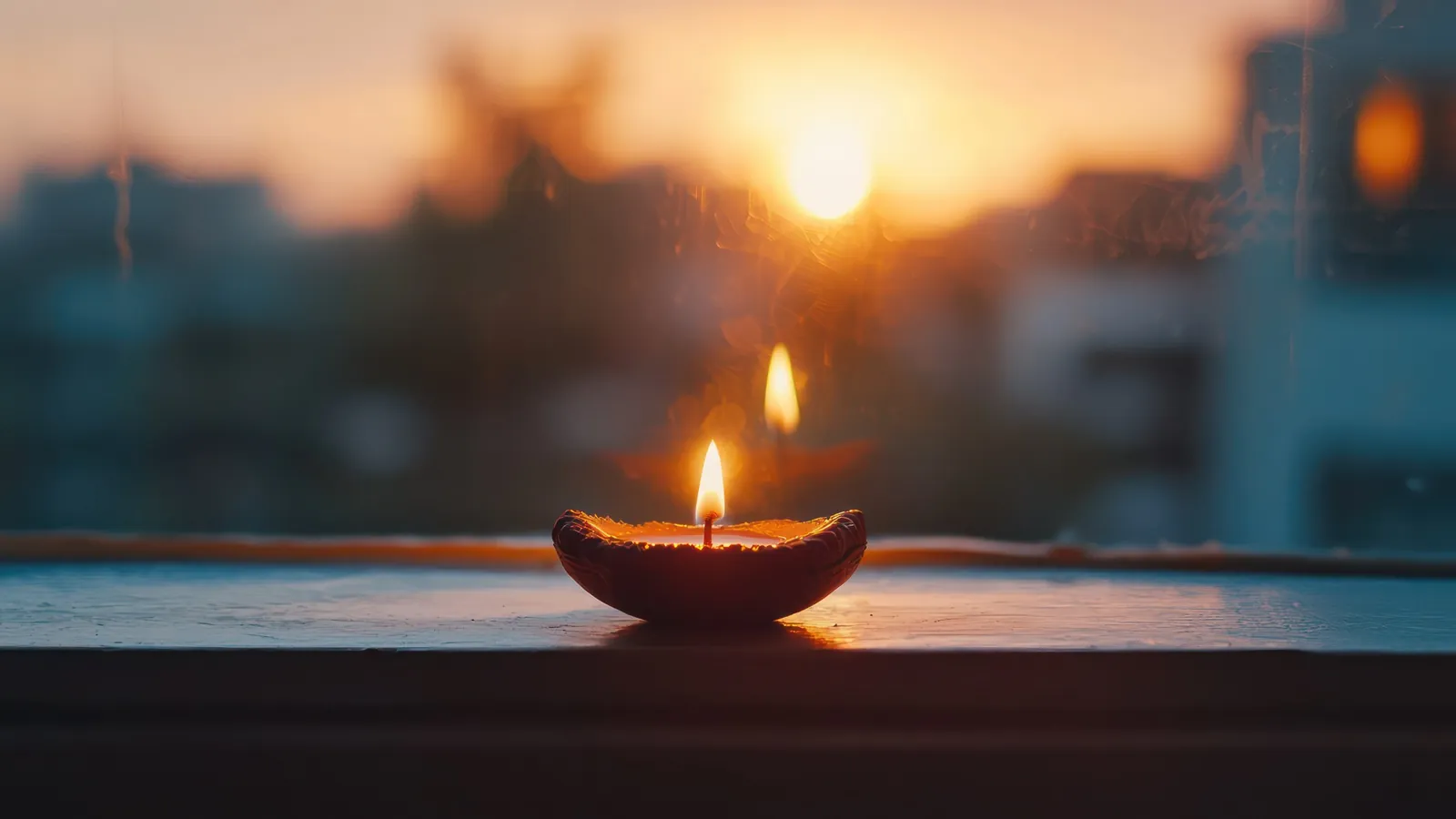
- Prepare the light. Keep a small lamp or diya ready by your seat, so the first thing you do is light it rather than reach for a screen.
- Keep the practice short. Ten or fifteen minutes of japa, a few rounds of the Gayatri or a page of reading is enough. Let it grow in its own time.
If you are unwell, pregnant, caring for a baby or working night shifts, let this hour wait; the texts themselves address their advice to those who are well. If you often have trouble sleeping, speak to a doctor.
Brahma muhurta is less a deadline than an invitation. Even a few mornings a week spent in this quiet hour can give the day a calm and deliberate beginning.
Questions
Common questions
What time is brahma muhurta today?
It depends on sunrise where you are. Find your local sunrise and count back about 96 minutes for the start and 48 minutes for the end, or check a panchang set to your city, which will adjust for the length of the night.
Is brahma muhurta always at 4 am?
No. It is tied to sunrise, so it moves through the year and from place to place. In the worked example above, it starts at about 4:04 am on a short summer night and about 5:03 am on a long winter one.
What if I cannot wake that early?
The classical advice is addressed to people in good health, and enough sleep comes first. A short, regular practice at another quiet time keeps the spirit of the hour, and you can move towards dawn gradually.
Sources
Where this comes from
- Sacred-texts.com (G. Bühler translation, 1886)The Laws of Manu, Chapter IVsacred-texts.com
- Enjoy Learning SanskritManu Smriti, Chapter 4, Verse 92enjoylearningsanskrit.com
- Easy AyurvedaAshtanga Hrudaya Sutra Sthana Chapter 2: Dinacharya Adhyayameasyayurveda.com
- SatyoriSutrasthana 2.1 — Pratarutthana (Rising at Brahma Muhurta)satyori.com
- Wisdom LibraryMuhurta: definitionswisdomlib.org
- Drik PanchangDay Panchangdrikpanchang.com
- US Centers for Disease Control and PreventionAbout Sleepcdc.gov
We write from the texts and references listed above, in plain English. Customs vary between regions, communities and families. Where your family has its own practice, follow it, or ask your family priest.
Take it further
Building a morning practice?A Vedic consultant can suggest a short, realistic sadhana for your circumstances, in writing, within five working days.
Spiritual consultation Keep reading